


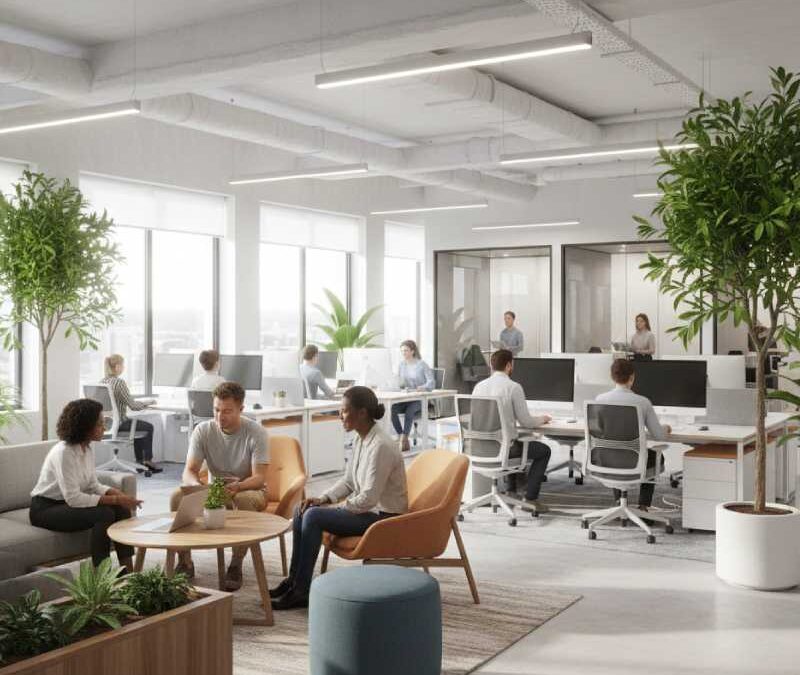
The modern workplace has evolved far beyond simply providing desk space. Today’s employees expect environments that support productivity, collaboration, wellness, and flexibility. Facilities management plays a central role in delivering these exceptional workplace experiences.
Employee-Centric Design
Contemporary workplace strategies prioritize employee needs and preferences. This includes diverse workspace options—from quiet focus areas to collaborative zones—that accommodate different work styles and tasks. Facilities teams are incorporating biophilic design elements, bringing natural light and greenery into indoor spaces to enhance wellbeing and productivity.
Indoor Air Quality and Wellness
Post-pandemic awareness has elevated the importance of indoor environmental quality. Advanced HVAC filtration, increased fresh air circulation, and continuous air quality monitoring demonstrate organizational commitment to employee health. These investments yield returns through reduced sick days and improved cognitive performance.
Technology Integration
Smart workplace technologies enhance employee experiences through features like mobile-controlled environmental settings, touchless access systems, and space booking applications. These tools provide convenience while generating valuable data about space utilization and employee preferences.
Amenities and Services
Modern workplaces offer amenities that support employee wellbeing and work-life integration. On-site fitness facilities, wellness rooms, quality food services, and concierge support demonstrate investment in employee satisfaction and help attract top talent.
Cleanliness and Maintenance
Visible cleanliness standards directly impact employee perception of their workplace. Regular deep cleaning, rapid response to maintenance issues, and attention to detail in common areas contribute significantly to overall workplace satisfaction.
Flexibility and Adaptability
As hybrid work models become standard, facilities must accommodate fluctuating occupancy levels. Flexible furniture systems, adaptable meeting spaces, and technology that supports seamless collaboration between in-office and remote workers are now essential.
Sustainability Visibility
Employees increasingly value working for environmentally responsible organizations. Visible sustainability initiatives—such as recycling programs, electric vehicle charging stations, and green building features—reinforce corporate values and enhance employee pride.
Communication and Feedback
Successful workplace experience strategies include regular employee feedback mechanisms. Surveys, suggestion programs, and direct communication channels ensure that facilities teams understand employee needs and can continuously improve services.
Exceptional workplace experiences don’t happen by accident—they result from strategic facilities management that places employee wellbeing, productivity, and satisfaction at the center of every decision. Organizations that invest in workplace experience through thoughtful facilities management gain competitive advantages in talent attraction, retention, and overall business performance.